In 2004, a very close friend — one of those unrelated-cousin type of friends — died by suicide after battling mental health issues for years. She was young. Like 23 or 24 years old. She died, and her family died with her; her parents separated. While she was struggling, she didn't get much help, and being over 18, HIPAA was a b*tch for her parents when they tried to help her. In her death, neither her parents nor her two younger siblings received extra support on how to grieve this kind of loss. In 2010, her youngest sibling — her brother — also died by suicide.
When a sibling dies by suicide,
women are 3.19 times more likely to die by suicide,
and men are 2.44 times more likely.
(Rostila, M., Saarela, J., & Kawachi, I. (2013). BMJ Open.)
In 2004, I knew what I wanted to do when I grew up. I wanted to be one of the people who helped people like her — and families like hers. In 2007, I took Psychology as an elective in high school. In 2009, I entered college and declared my major as General Psychology. In my first year, I attended a continuing education event to map out my plans after finishing my four years. In 2012, I took the GRE and met with the head of my university's psychology department to discuss applying to graduate school without taking any time off. Not wasting any time.
In 2013, I applied to 11 schools and got into 3. One in Louisiana with a program that would lead into a PhD. One in Kentucky — a terminal master's program leading to an LPA (Licensed Psychological Associate). One in Chicago that could be a terminal master's if I secured my own internship. I visited both Kentucky and Chicago and chose Kentucky.
I know what you might be thinking.
But Kirsten — you graduated from Southeastern?!
Don't worry. I'm getting to my shame.
I entered the psychology master's program in August 2013, and by January 17th, 2014 — I did not meet the minimum grade required by that university. I appealed, and they sent a letter to my house that read: "You have failed."
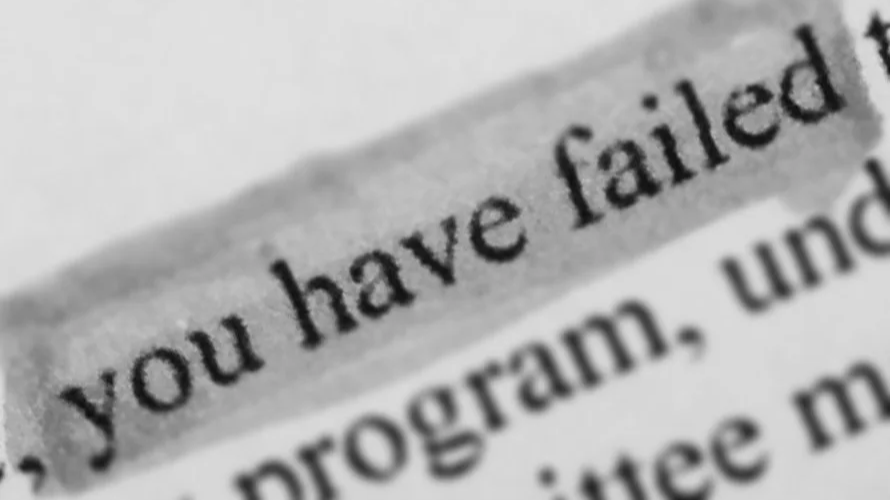
I was crushed. And those two words triggered a shame spiral that lasted years.
In the short version: I highlighted those words and taped that paper to the inside of my front door. Every time I left the house for the next four days, I read it before walking out. On the fourth day, I left distracted — not present at all — and got into a car accident.
More shame.
I gave up for years.
In 2016, someone told me to go back to school. I sarcastically said, "Yeah, right." Within 365 days of that conversation, I studied for the GRE, went to my psychologist to be retested for my academic accommodations, took the GRE, applied to school, got an interview, and was accepted.
That shame spiral started with reading "You have failed" — and snowballed into "YOU ARE A FAILURE" — until eventually, slowly, it worked its way back down to: it never hurts to try again.
Now, 12 years after receiving that letter, I can look back and say — I am so glad I am exactly where I am. In the end, I am an LPC in Louisiana, with a family and a practice I love.
Shame might be loud. But it is usually not right.