Committed to Growth
My Continuing Education
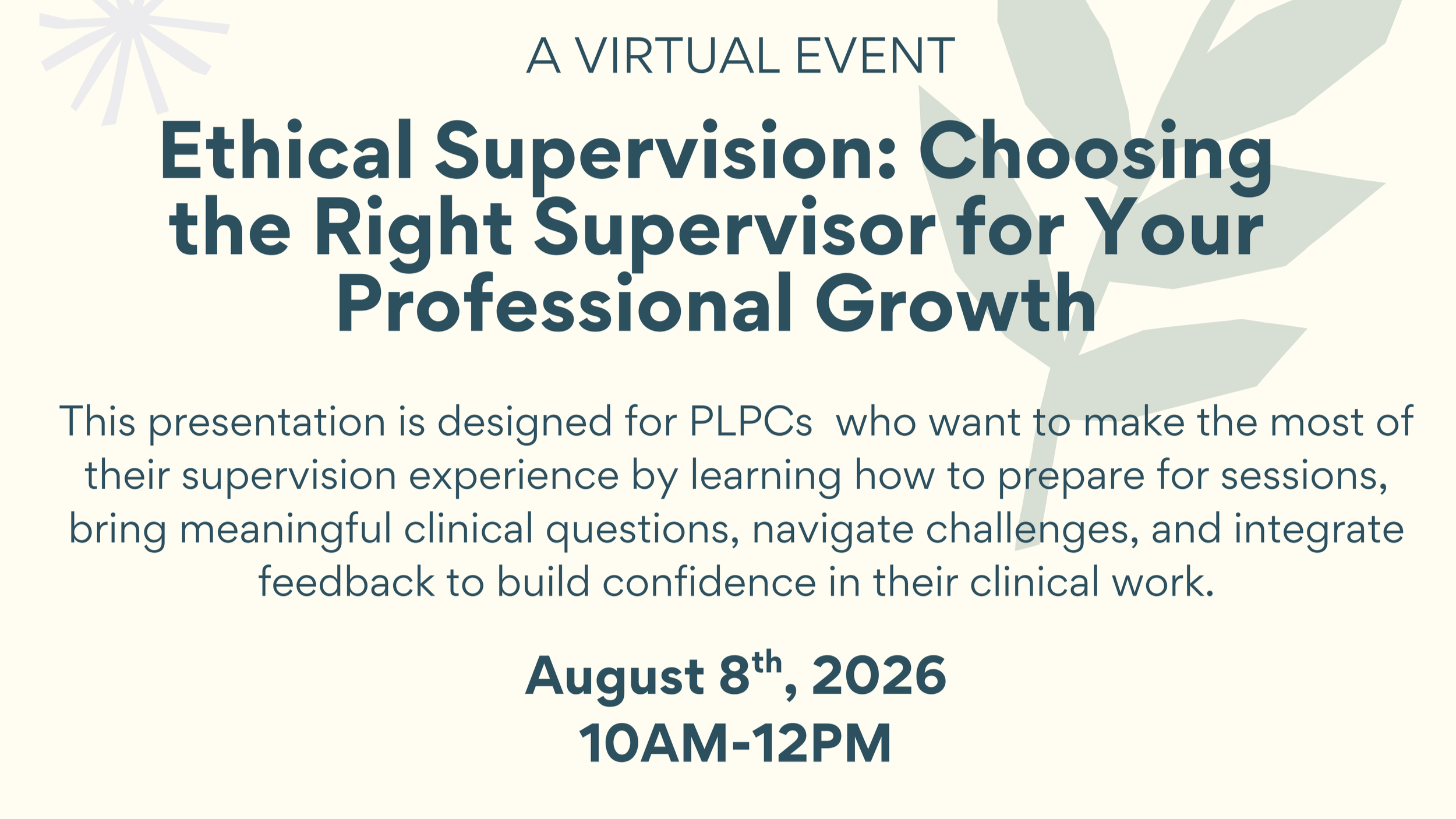
How to get the most out of supervision - Kirsten Dantin & Jennifer Ladd
An online continuing education opportunity for PLPCs ($49.87) and graduate students ($28.52) to learn how to ethically choose the right supervisor for your professional growth.
Jennifer Ladd, LPC-A, and I, Kirsten Dantin, LPC-SA, are passionate about helping the next generation of therapists navigate finding the best supervisor to fit their needs. We both graduated from Southeastern Louisiana University and have experience with internship supervisors and board-approved supervisors. We have also supported internship students in previous jobs. Currently we are both in individual private practices and are working together to provide CEU opportunities. We enjoy working with students and new professionals as they find their voice in their professional growth.
This presentation is designed for PLPCs who want to make the most of their supervision experience by learning how to prepare for sessions, bring meaningful clinical questions, navigate challenges, and integrate feedback to build confidence in their clinical work.
To learn more about this event please visit Oasis Website: How to get the most out of Supervision
If you have any questions please email Office@Oasis-CAS.com

Aspirational Supervision: How to Inspire Growth and Change as an LPC-S and LMFT-S
Aspirational Supervision: How to Inspire Growth and Change as an LPC-S and LMFT-S
Presented by Christian Dean, Ph.D., LPC-S, LMFT-S and Sola Kippers, Ph.D., LPC-S, LMFT
The presentation will explore LPC-S and LMFT-S rules, updates, and standards of practice. An exploration of aspirational supervision guidelines and practices will assist supervisors to help their supervisees grow and develop as clinicians.
3.0 CE clock hours in Supervision
Approved for LPC, LMFT, and NBCC
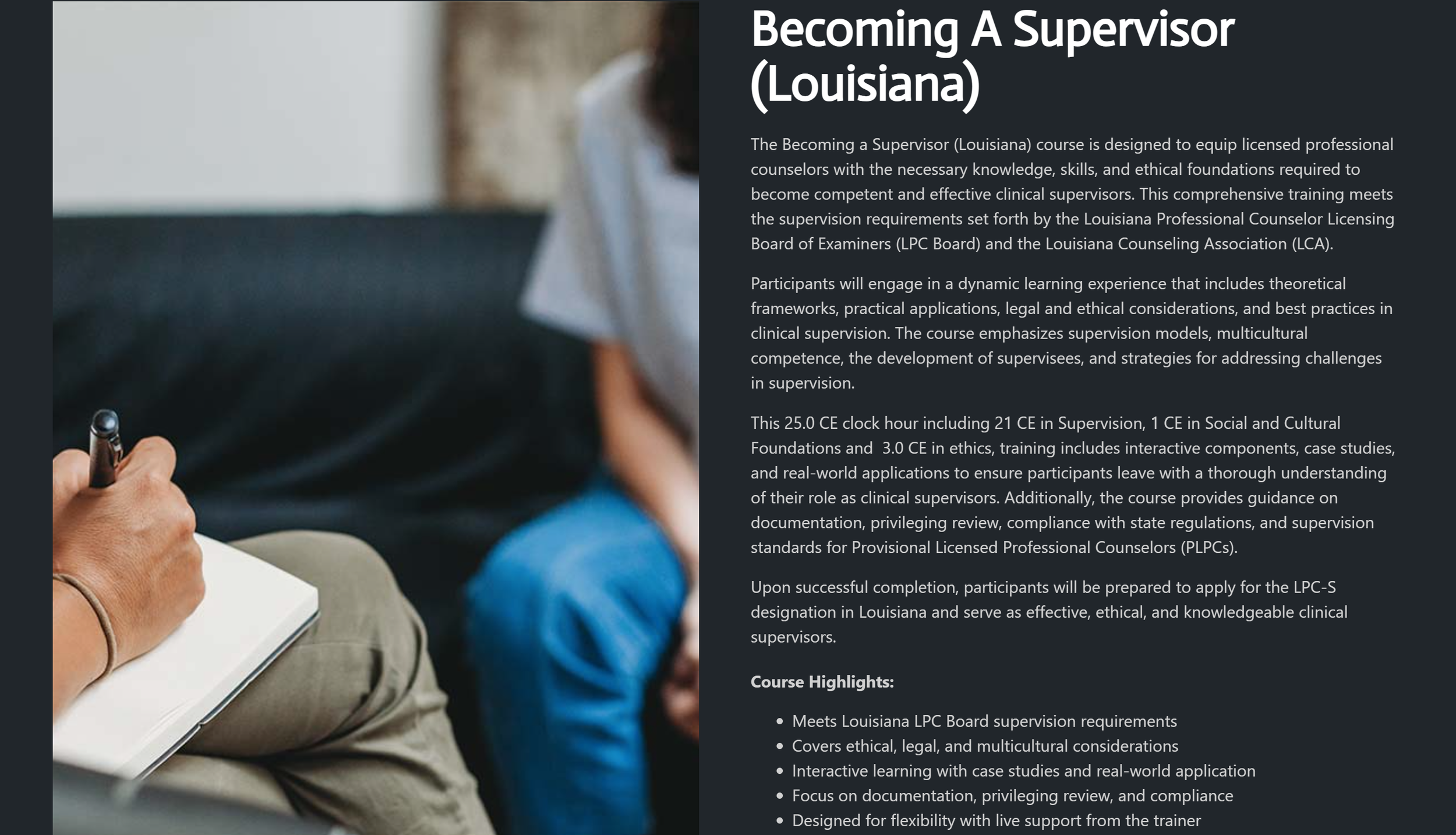
Becoming a Clinical Supervisor — ACS Hybrid Training
I’m becoming a supervisor because I deeply care about PLPCs receiving quality, ethical supervision. I stay involved with my alma mater and support new counselors whenever I can, because I believe in investing in the next generation and strengthening our field through thoughtful mentorship.
Description
Becoming a Clinical Supervisor | ACS Approved Hybrid Training
45 Hours | Live + Virtual/On-Demand | RCTP# 1009-ACS
This 45-hour hybrid training program prepares licensed mental health counselors to meet the educational and training eligibility requirements for the Approved Clinical Supervisor (ACS) credential through the Center for Credentialing & Education (CCE).
Program Format
This training is delivered in two components:
25 Hours — Self-paced, virtual/on-demand modules
20 Hours — Live, interactive instruction across three sessions:
August 5, 2026 — 8 Hours
August 12, 2026 — 8 Hours
August 13, 2026 — 4 Hours
Who Should Attend
Master’s-level or doctoral-level clinicians in mental health counseling pursuing or maintaining the ACS credential.
“Becoming a Clinical Supervisor” for Credentialing & Education (CCE) Registered 1009-ACS training provider. This course is approved as a 45 hours for ACS training course.

Adjuncting 101: Your Guide to Adjunct Professor for Social Workers and Counselors
In this 2 hour workshop, you'll learn how you can apply your skills and supplement your income as a mental health professional from the clinic to the classroom. We'll cover exactly what you need to know when applying for an adjunct position, how to design your course, and how to create systems that work for you and your students so that you can be well on your way to earning a side job.
If you're a mental health professional who has always thought about teaching a college course part time but have no idea where to start, this online workshop is for you.
Join me, Dr. Victoria Rodriguez, as we break down myths about being an adjunct instructor (such as "you can't make money teaching part-time" or "you need a PhD to teach at a university") and review the tools you'll need to thrive teaching part time.
I'm so excited for you to go from the clinic to the classroom and to share your skills with the next generation of mental health professionals.

Transforming Complex Trauma: EMDR and the RAP Technique
Approved for 3 EMDRIA Credits
EMDR therapy is highly effective at resolving difficult memories for trauma survivors. Yet adaptations are necessary when addressing complex trauma. Racial trauma involves experiences of oppression and discrimination tied to a person’s social identity, creating stressors that share similarities with dissociative symptoms. This presentation will provide a brief overview of Rhythm and Processing (RAP) strategies, offering a framework for integrating Anti-Racist Psychotherapy as an adjunct to EMDR to address identity-based stresses, complex trauma histories, and dissociative symptoms in sessions. This session will include a video demonstration and an experiential group self-care practice so participants can personally experience the benefits of the RAP technique and learn to use it themselves after completing the workshop.
Presenter: David Archer, Psychotherapist
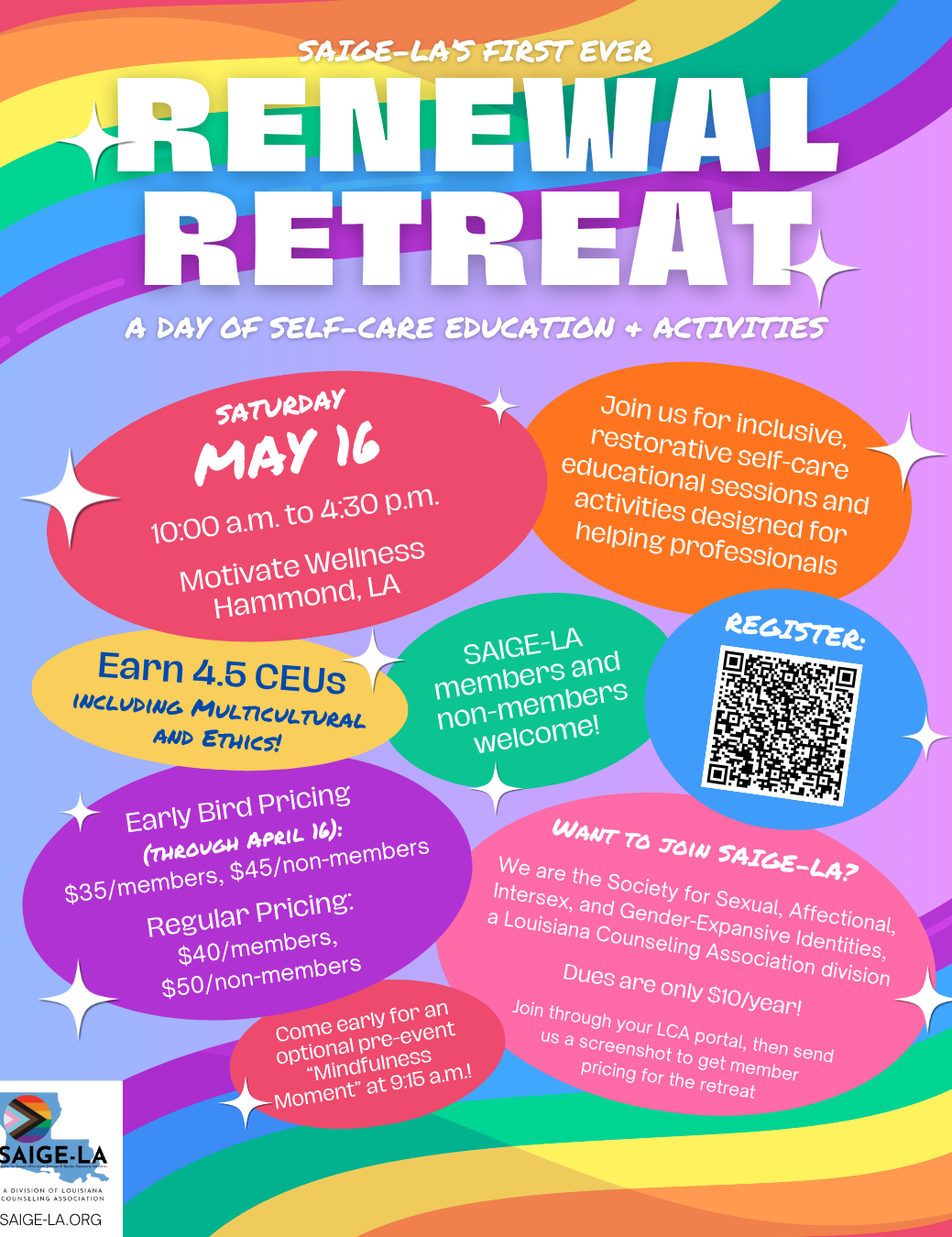
Counselor Self-Care Retreat
An interactive session for makers and thinkers to collaborate, connect, and spark new ideas.